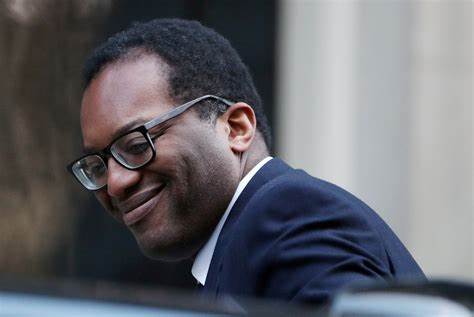
Chancellor reveals stamp duty cuts and relaxed planning rules
Chancellor Kwasi Kwarteng has vowed to make it easier to build, with construction at the centre of his vision for a “new era for Britain”.
On Friday morning this week he unveiled his mini-budget, outlining 38 new Investment Zones across the country, where planning rules are relaxed and more land is released for development.
To support growth right across the country, we need to go further, with targeted action in local areas.
KWASI KWARTENG, CHANCELLOR OF THE EXCHEQUER
So today, I can announce the creation of new investment zones. We will liberalise planning rules in specified agreed sites, releasing land and accelerating development.
Kwarteng also announced a permanent cut to stamp duty as part of the Government’s measures, increasing the threshold from £125,000 to £250,000, with first time buyers able to avoid stamp duty on properties up to £425,000.
200,000 more people will be taken out of stamp duty. This is a permanent cut effective from today.
KWASI KWARTENG, CHANCELLOR OF THE EXCHEQUER
Industry reaction was mixed. Stewart Lynes, CEO of Miller Homes, described the stamp duty cut as a “shot in the arm”, which “demonstrates the Government’s vision to unlock home ownership for a new generation.”
However, Matthew Pratt, CEO of Redrow, welcomed the changes but warned that more needed to be done. “Stamp duty needs to be reformed to help the housing market work more effectively and stimulate more transactions,” he commented, “which will in itself drive tax generation.
“We would encourage the Government to consider further steps to reduce the stamp duty burden by reducing the tax bands across all levels, and introducing a lower, flat rate of tax for all homes.”
Stuart Law, CEO of the Assetz Group, recognised the support for first-time buyers and those on lower incomes, but warned that the move would also “stimulate demand further at a time when it is already vastly outstripping supply and that’s only going to send prices one way.”
New Housing Minister appointed
Lee Rowley, MP for North East Derbyshire, has been appointed as Housing and Planning Minister in Liz Truss’ new-look Government.
In a delayed announcement following the mourning period for Queen Elizabeth II, Rowley moves to the role after having previously spent a year as Construction Minister.
Whilst there was no formal announcement, Rowley tweeted that he was “delighted” to join Simon Clarke, who was recently given the role of Levelling Up Secretary.
Clarke described Rowley as “a huge intellect” and “a great friend” who is “keenly committed to building the homes we need.”
Project starts begin to slow as tender prices stabilise
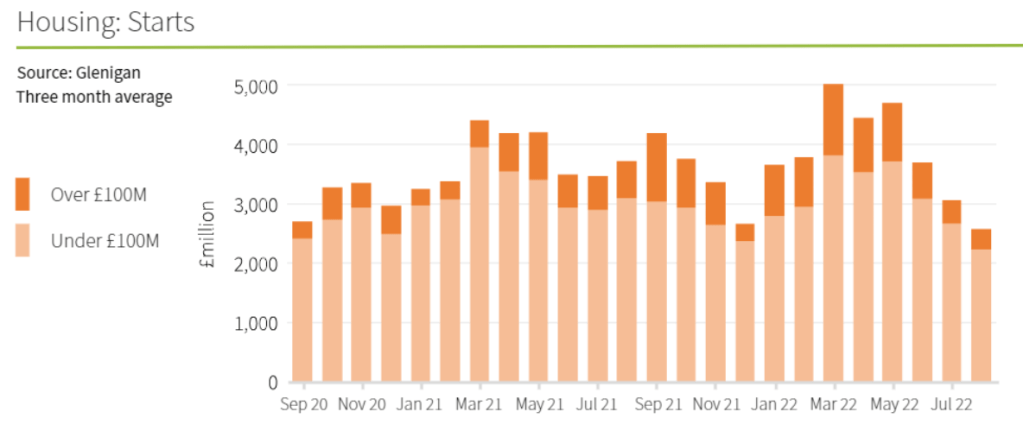
Analysis by construction data specialist Glenigan has revealed a 38% fall in project starts for housebuilding when compared to the previous three months, and a 28% fall year-on-year.
Reporting in their September 2022 Construction Review, the firm revealed that £6,689m of work commenced in the three months to August.
Meanwhile, cost consultant Mace has announced that tender price rises have peaked in 2022, as they announce no adjustment to their tender price inflation forecast for the rest of the year.
Maintaining the previously anticipated rise of 8%, the firm adjusted their forecast for 2023 down slightly to 3.5% from 4.5%.
As energy prices continue to rise and the cost of living crisis mounts, clients, contractors and the wider construction industry face a tricky balancing act.
ANDY BEARD, GLOBAL COST AND COMMERCIAL PRACTISE LEAD, MACE
Given higher input cost, there is limited scope in the medium term for tender prices to do anything but continue to rise, and pressures will come from all sides to keep projects progressing.
 Housing View