
Housing market stabilises amidst optimistic outlook
Rightmove has hailed a “resilient” housing market in 2023, despite property prices falling in December by -1.9% – a bigger fall than the previous 20-year average of 1.5%, as sellers get more competitive.
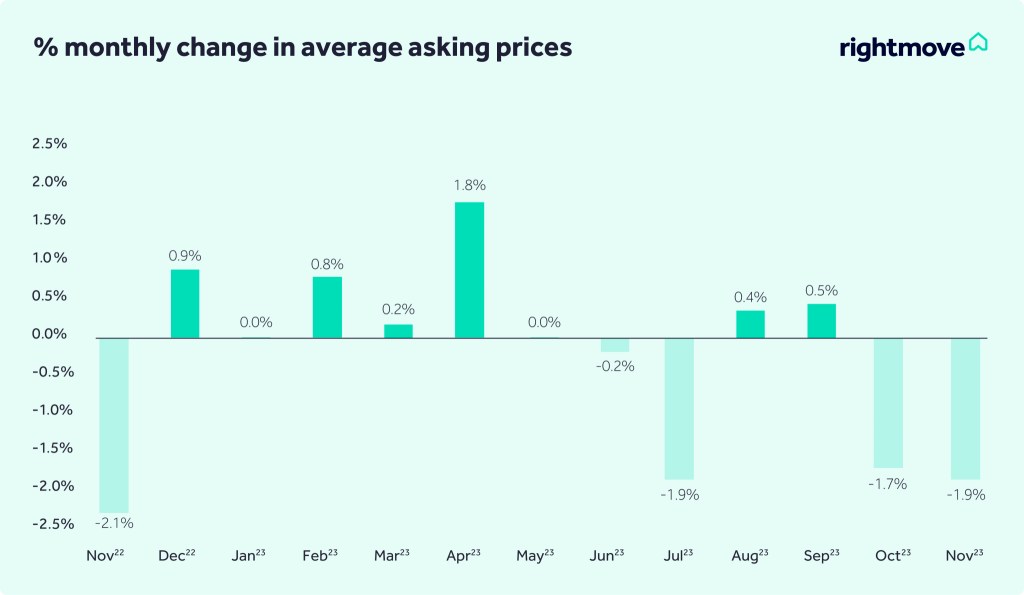
Describing the market as moving from “frenzy to more normality”, the property website has reported house prices ending the year just -1.1% below this time in 2022, with agreed sales just -13% lower than the boom of last year.
And, says Rightmove, property prices are higher in seven out of eleven regions now than they were a year ago, with the North West leading the way, up by 1.5%.
Average mortgage rates have now fallen for 19 consecutive weeks, with the average 5-year fixed mortgage rate now 5.11%, compared to 6.11% in July.
Rightmove is also predicting a -1% fall in UK house prices in 2024, as motivated sellers adjust prices downwards in a competitive market.
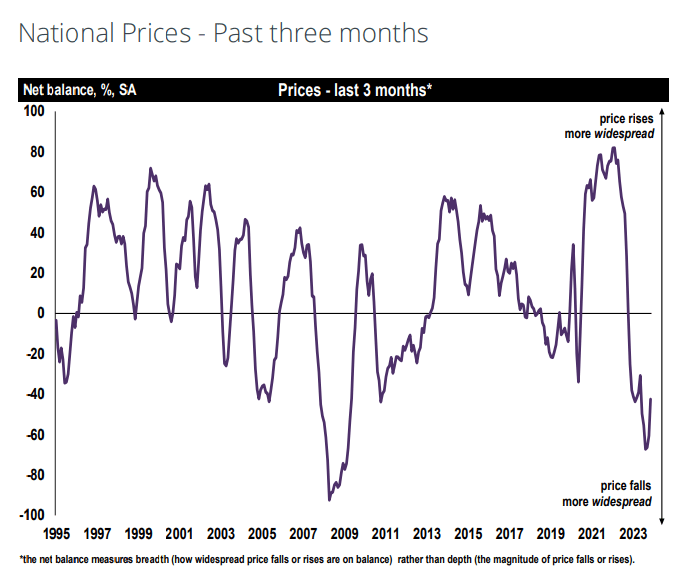
Meanwhile, November’s UK Residential Market Survey by the Royal Institution of Chartered Surveyors (RICS) has shown a net score of -14% for new buyer enquiries in the month – the least negative figure since April 2022.
Respondents also noted that national house price declines appear to be slowing, and the near-term sales outlook is improving, supported by lower mortgage rates.
Good news also from the Department for Levelling Up, Housing and Communities (DLUHC), which has announced the final round of the Brownfield Land Release Fund 2, which could unlock thousands of new homes on brownfield sites.
Councils across England are invited to bid for a share of the £80m fund, set to release over 8,000 new homes by March 2028.
This fund will transform unloved and unused brownfield sites into thriving new communities, helping more young families on to the property ladder and creating thousands of jobs.
Lee Rowley, Minister for Housing
This is a game changer for councils and I strongly encourage them to apply and reap the benefits in their local areas.
However, Arcadis has warned that construction orders were -13% down on the long-term trend in the third quarter of 2023, with new build work contracting for three successive quarters.
The cost consultant is predicting tender price inflation of between 1% and 2% for buildings next year, but did note an improvement in sentiment in the housebuilding sector, which pointed to some optimism for 2024.
It is still way too early to suggest that the worst is over for the sector. Nevertheless, there are enough positive data points to provide a chink of light for a hard-pressed sector.
Arcadis, Market View – Winter 2023
Government publishes timber construction roadmap
The Government has issued a new roadmap to boost the use of timber in construction, in a move designed to reduce carbon emissions.
The report, published by the Department for Environment, Food and Rural Affairs (DEFRA) sets out plans to increase the use of timber in construction and reduce the amount of timber imported.
Key actions include improving data on timber and whole life carbon, boosting skills across the suppy chain, and addressing fire safety concerns to expand the use of engineered mass timber.
Investing in timber is investing in growth and levelling up. The built environment is responsible for a huge proportion of UK carbon emissions, and using home-grown timber in construction is key to reducing emissions.
Rebecca Pow, Forestry Minister
Promoting the use of timber as a building material is a key part of the government’s net zero strategy. It will innovate the economy, play a role in creating green jobs and also help meet our tree-planting targets.
The consultation, which closes on 06 March 2024, outlines options for transitional arrangements and seeks views on the newly introduced Part O, which deals with overheating.
The standards are set to come into force from 2025.
Construction output falls slightly in October
The Office for National Statistics has revealed that monthly construction output has fallen by -0.5% in October when compared to the previous month.
This follows a increase of 0.4% in September, and signals the effects of poor weather and strong winds in the month.
Over the three months to October 2023, construction output in Great Britain reduced by -0.3%, driven by a -2.0% decrease in new work.
Analysis from Barbour ABI also revealed residential planning applications were down -25% in October 2023 when compared to last year – however, planning approvals in the year to November are only marginally down on 2022, by just -1%.
Bloor Homes reports reduced profit
The UK’s largest privately-owned housebuilder has reported a fall in pre-tax profit of -9%, dropping to £287m from £318m the previous year.
Turnover was down slightly at £1.34bn in 2023, compared to £1.37bn in 2022, with the developer selling 4,252 homes this financial year (2022: 4,241).
The business cited “challenging” market conditions, “with both inflation and interest rates eroding the disposable income of our customers, impacting immediate demand.”
 Housing View