Sector welcomes new government with cautious optimism
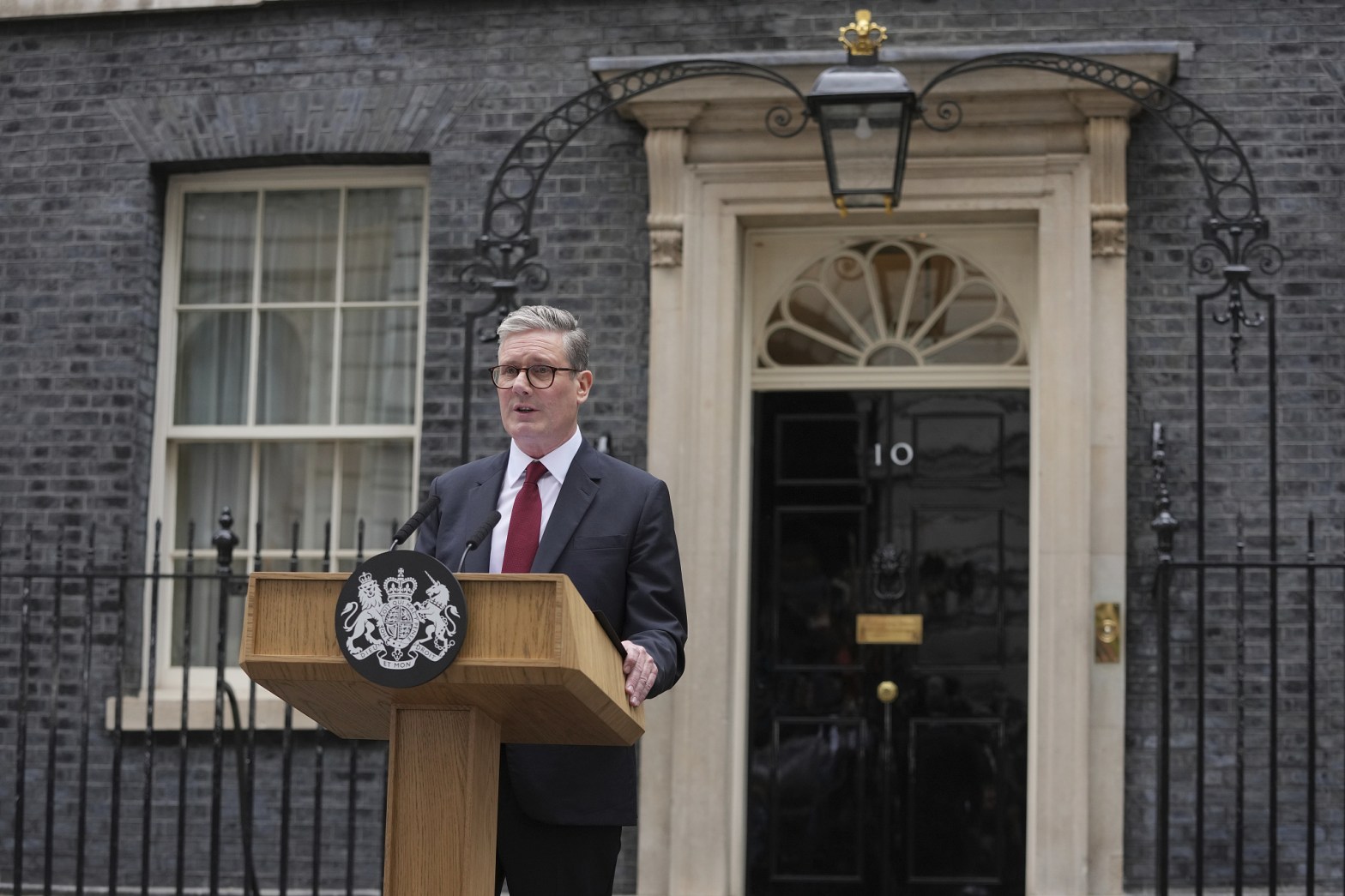
Leaders across the housing industry have congratulated the Labour Party on its historic general election landslide victory – but also encouraged the new government to act quickly to unlock key issues facing the sector.
Kier Starmer’s party won over 410 seats in Thursday’s election, marking Labour’s first return to power for 14 years, with the majority of housing professionals buoyed by promises to bring planning reforms and drive over a million new homes over the five-year term.
The success of Labour’s housing targets will very much depend on two key issues being addressed.
Brian Berry, Chief Executive, Federation of Master Builders
First, the need to reform the planning system to make it easier and quicker to build. Secondly, the urgent need to tackle the skills crisis ensuring we have enough skilled workers in the construction industry to build the homes needed.
The news comes after a Glenigan survey of 505 industry professionals from across construction, architecture and engineering earlier this week found that 42% said they trusted Labour to invest in the country’s infrastructure.
In addition, a survey of more than 2,000 people by estate agent Jackson-Stops found that 19% of homeowners were planning to vote Conservative, with 30% voting for Labour.
If government can create a pro-development policy environment the industry stands ready to deliver.
Neil Jefferson, Chief Executive, Home Builders Federation
Building the homes the country needs will address the social issues our housing crisis is creating, provide young people with access to decent housing, whilst creating tens of thousands of jobs and boosting investment in communities in every area of the country.
At the start of the week, Starmer said he would “hit the ground running”, “turbocharging” housebuilding from “day one”, according to The Sunday Times. Starmer – along with Rachel Reeves – also suggested that at least three housing announcements would be made within the first fortnight of a Labour government.
And, with Angela Rayner confirmed on Friday as the new Secretary of State for Levelling Up, Housing and Communities, the industry is looking to what it hopes will be a bright future.
The new government has a clear idea of what it wants to do and must now show a sense of purpose to get on with building a million and a half new homes. We look forward to their much-anticipated Housing Recovery Plan and hearing what ministers want to do in their first 100 days.
John Newcomb, Chief Executive, Builders Merchants Federation
House price growth stable in June
Halifax and Nationwide published their house price index for June this week, with both firms describing market performance during the month as “stable”.
Nationwide reported a 0.2% growth in the month and 1.5% over the year, with the average property valued at £266,064.
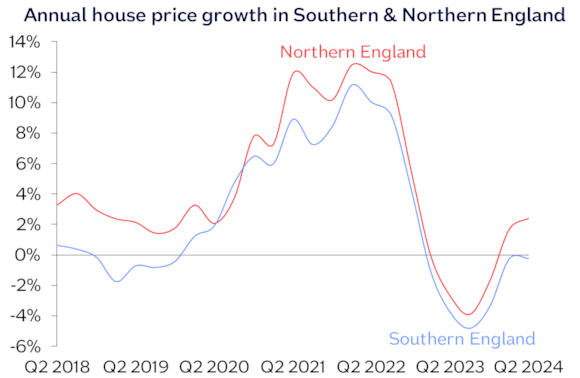
The mortgage lender also noted a higher annual growth in Northern England over the past six years when compared to the south of the country.
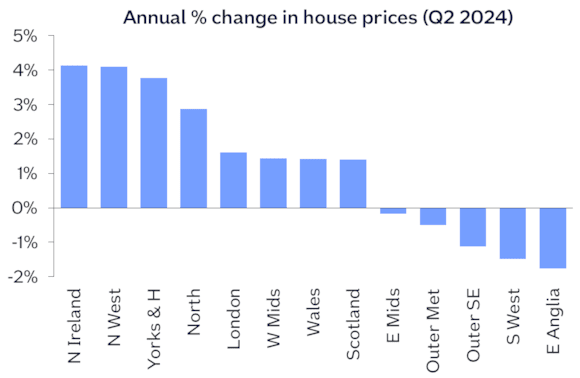
Meanwhile, Halifax reported a -0.2% fall in house prices in June, with the annual rate of growth remaining unchanged from May, at 1.6%.

With the typical home costing £288,455, the firm also reported a 4.0% growth over the year in property prices across Northern Ireland, with prices increasing in Scotland by 1.6% and Wales by 2.7%.
The news comes as the headline S&P Global UK Construction Purchasing Managers’ Index registered 52.2 in June, down from 54.7 in May. Any score above 50 demonstrates an increase in output.
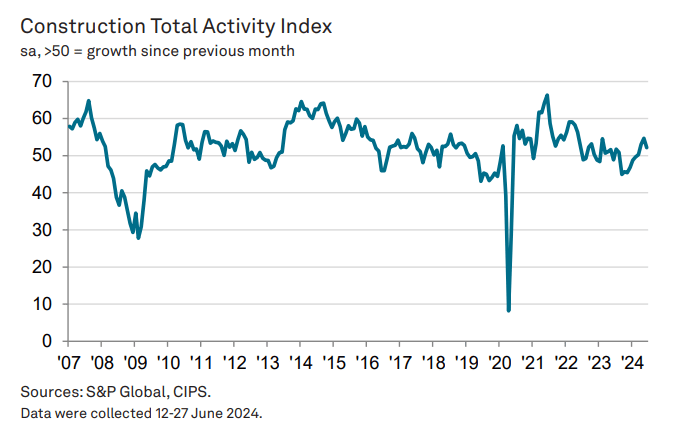
However, the only category to record a drop in June was housebuilding, where output fell following the first increase in 19 months in May.
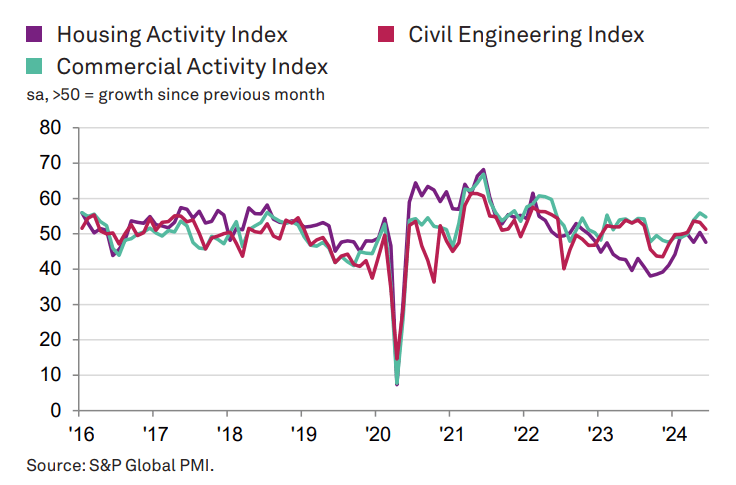
While there were signs of a slowdown in the latest survey period, most notably around housing activity, firms indicated that a slowdown in new order growth was in part related to election uncertainty.
Andrew Harker, Economics Director, S&P Global
We may therefore see trends improve once the election period comes to an end.
HSE reveals sharp rise in construction deaths
Latest figures from the Health & Safety Executive have revealed that 51 construction workers died following accidents during the year to 31 March 2024.
The yearly death toll stands at 138 across all industries.
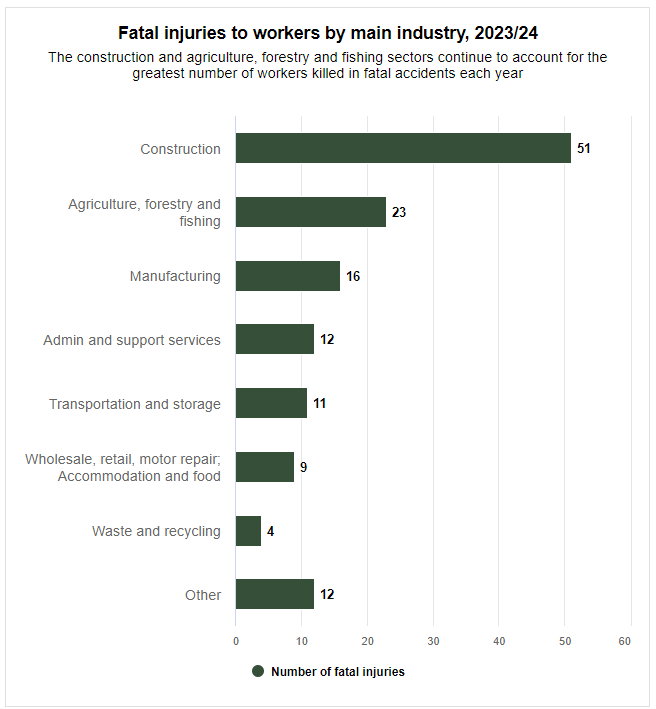
The number of construction deaths is an increase on the previous year’s total of 47, and the five-year average of 42.
The HSE said: “While the number of fatalities fluctuates year-on-year, the average number of worker deaths in construction in the latest two years is statistically significantly higher than the pre-pandemic period.”
Crest Nicholson rejects another bid
Housebuilder Crest Nicholson has rebuffed an approach from rival firm Avant Homes, weeks after rejecting a second takeover offer from Bellway.
Crest Nicholson said that it was “not currently minded to engage in discussions regarding a potential transaction with Avant while in an offer period in relation to a possible all-share offer from Bellway.”
 Housing View