
Industry welcomes Government changes
Angela Rayner, Deputy Prime Minister and Housing Secretary, has this week confirmed that the Government will reintroduce mandatory housing targets, setting an annual goal of 370,000 new homes.
In a statement to the House of Commons, Raner also said that the method of calculating local housing supply would also change to better reflect “the urgency of supply for local areas”.
Rayner also said that the delivery of social and affordable homes is a “crucial” step in achieving the Government’s goal of 1.5 million new homes over five years.
In an opinion piece for The Guardian, Rayner said that the “housing emergency” her party anticipated when they took office was “even more grim than we imagined”, and said that Labour would be prioritising poor-quality ‘grey-belt’ land for building, and introducing “golden rules to ensure development works for local people and nature”.
This was reflected in the updated National Planning Policy Framework, which states that councils will need to identify grey-belt land, and developers looking to build on grey-belt land will be required to include 50% affordable housing.
Meanwhile, property consultancy Carter Jonas has published a report which finds that, if all of the Government’s intended 1.5 million homes were built on green belt land, it would only equate to 3% of the current extent of the green belt.

The firm acknowledged that this would not be the case, as the Government would prioritise brownfield and non-green belt locations, but emphasised that their research showed “there are strategic benefits in releasing some green belt land for housing”.
Rayner also announced this week that Sir Michael Lyons and Dame Kate Barker have been appointed Chair and Deputy Chair respectively of the New Towns Taskforce.
Lyons, who chaired the Lyons Housing Review in 2013, and Barker, author of the Barker Review of Housing Supply in 2004 and current Chair of the Radix Housing Commission, will lead the team responsible for identifying areas for at least 10,000 new homes.
A New Towns Code will sit behind these new places, dictating criteria which developers must meet, including 40% affordable housing and necessary public spaces.
The proposals have been warmly received, with the Home Builders Federation (HBF) saying that “industry stands ready to make changes to rapidly increase the pace at which homes are built, delivering the high-quality and affordable homes the country needs”.
The reception comes in the same week that the HBF updated its housebuilding ‘blueprint’, originally published in the build-up to the general election.
The updated report – Homebuilding: An engine for growth, prosperity and opportunity – calls for the expansion of green mortgages and removal of stamp duty from homes with an Energy Performance Certificate of B or above.
House prices edge up in July
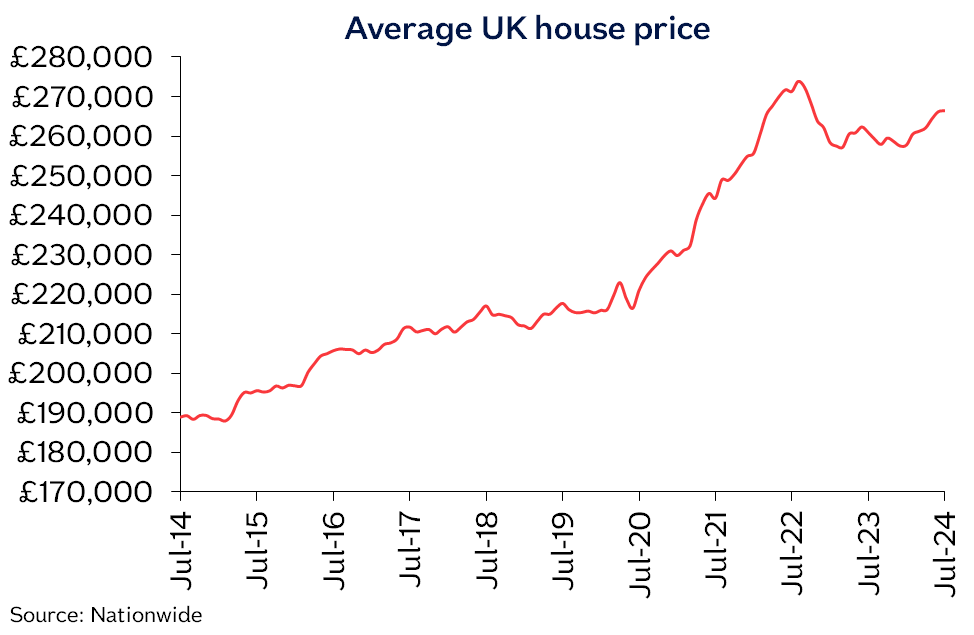
The latest house price index report from Nationwide has revealed that the average UK property price rose by 0.3% in July, reaching a value of £266,334.
House prices also rose by 2.1% across the year, according to the mortgage lender, increasing from 1.5% in June and representing the fastest pace since December 2022.

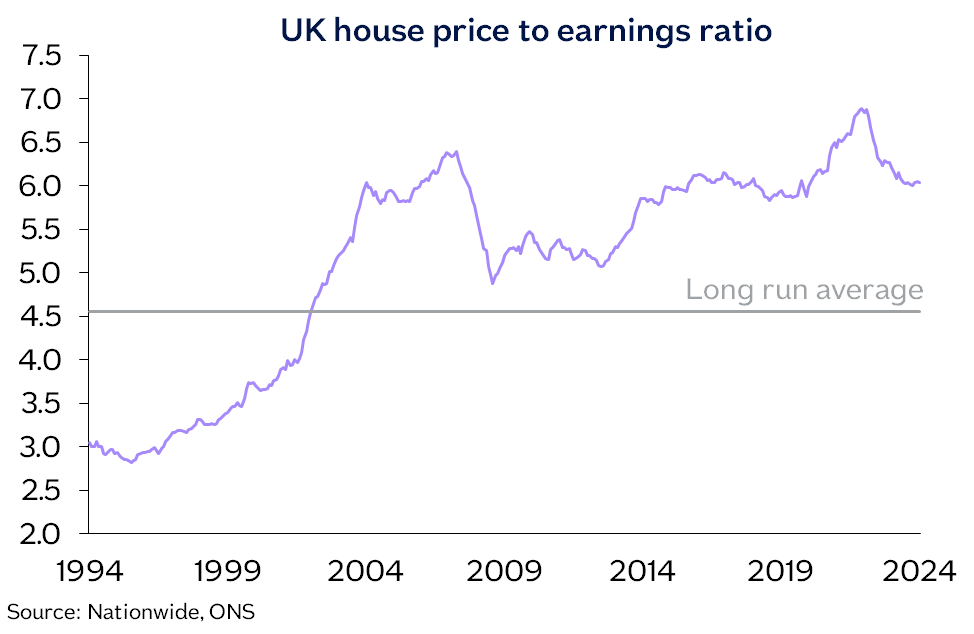
The firm also said that affordability was likely to improve “gradually” due to a combination of wage growth outpacing house price growth, with “some support from modestly lower borrowing costs”.
Surveys show limited construction growth
The latest quarterly workload survey from the Royal Institution of Chartered Surveyors has found little growth in construction activity between the first and second quarters of this year; however, there is growing optimism for the future.
The Q2 RICS Construction Monitor noted a net balance of 25 respondents are expecting increased workloads over the next year, amid a backdrop of planning and housing announcements.
Meanwhile, the Construction Products Association (CPA) has downgraded the construction sector’s near-term growth prospects, predicting output to fall by -2.9% this year.
The firm’s Summer Forecast attributes the negative outlook to private new build housing, as consumer confidence continues to struggle.
However, the CPA’s Summer Forecasts for 2025 and 2026 remain unchanged, with growth of 2.0% and 3.6% respectively.
Data specialist Glenigan has reported an improvement in new starts over the past three months, driven by growth in new housing.
Residential new starts have increased by 12% in the three months to the end of July from the previous quarter, and noted that “confidence is starting to return to the market”.
Taylor Wimpey reports “good performance against stable backdrop”
Housebuilder Taylor Wimpey has said that it expects full year completions to be towards the upper end of its previous guidance of 9,500 to 10,000 new homes.
Publishing its half-year results this week, the firm saw completions of 4,728 new homes in the first six months of the year, reaching a group operating profit of £182.3m.
Chief Executive Officer Jennie Daly acknowledged the early actions of the new Government, saying: “we welcome their recognition that planning is a major barrier to economic growth, of which housebuilding is a significant component, and we look forward to working constructively with them to deliver much needed new homes across the UK.”
Meanwhile, the Berkeley Group has announced plans to return to the land market, after being absent for more than two years.
Chief Executive Rob Perrins said that his firm was “determined to play our full part” in the Government’s plans for the industry, and aims to start an additional 10,000 private and affordable homes over the next five years.
 Housing View