
Official data reveals a -6% drop in the year
Government figures released this week have shown that the number of net additional dwellings in 2023/24 was 221,070 – a -6% decrease when compared to the 234,290 dwellings built in 2022/23.

Housing additions are now around -11% below the most recent peak in 2019/20, but remain 69% higher than the slump in 2012/13.
Gross additional dwellings, which include changes of use and conversions, reached 226,460. These were offset by 5,390 demolitions.
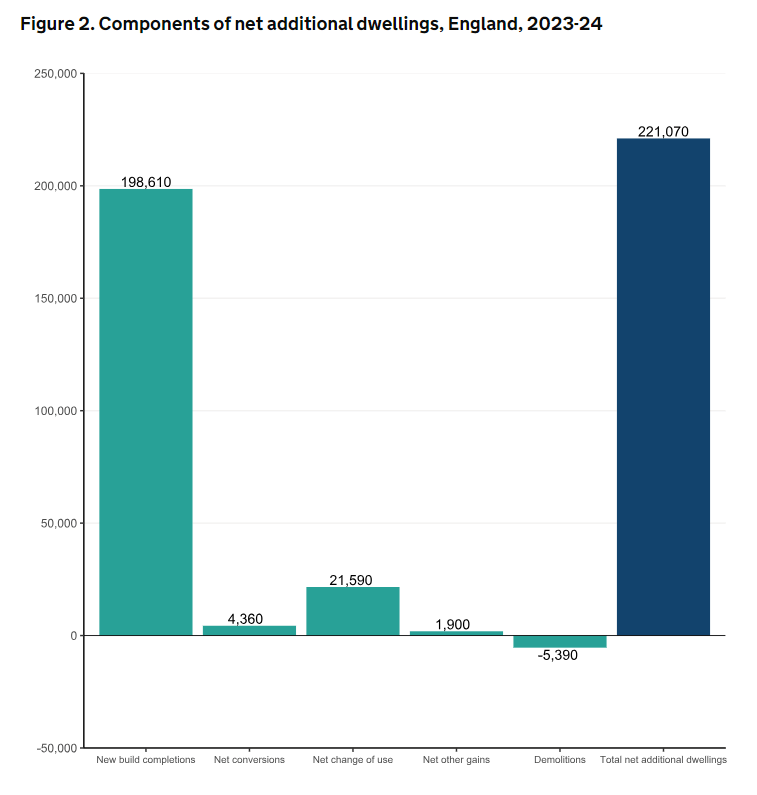
The number of new build completions was 198,610; a -6.5% fall from last year’s figure of 212,364.
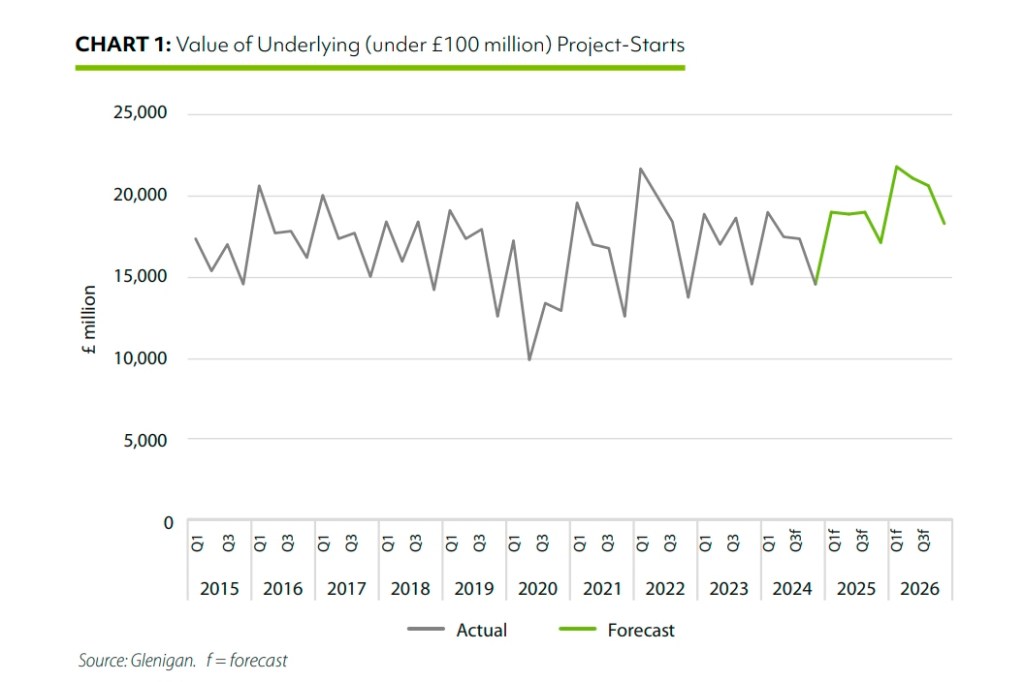
However, the latest UK Construction Industry Forecast from data consultant Glenigan predicts a 13% rise in the value of private housing starts in 2025, followed by a further 15% rise in 2026. This comes after falls of -10% in 2023 and -5% in 2024.
Material supply issues could follow demand surge
The latest supply chain group statement from the Construction Leadership Council has warned of a reduction in material supply and stock levels as a result of a rapid increase in demand for construction projects.
The firm said that a slowdown over the past two years had resulted in a “reduction in supply and stock levels”, but group co-chairs John Newcomb and Peter Caplehorn said that “a rapid surge in demand in the coming year may result in supply issues”.
The statement also revealed that brick capacity in the UK is around two billion; half of the quantity in the 1970s when the UK last built 300,000 homes a year.
Higher energy costs could also lead to price increases for several products, the group warned.
Taskforce calls for national housing strategy for ageing population
A long-awaited report from the Older People’s Housing Taskforce has called for a national strategy to prepare for an ageing society and has recommended a joint unit between MHCLG and the Department of Health and Social Care to “create a plan of action”.
The paper, entitled Our Future Homes: Housing that promotes wellbeing and community for an ageing population, also proposes that houses be designed for later life, stating: “Homes need to be desirable, accessible, adaptable, technology-enabled, energy efficient and affordable, to meet the housing needs and lifestyle choices of an ageing population”.
The group also called for a 10% target for older people’s housing on new developments through the Affordable Homes Programme.
 Housing View