
Prime Minister reiterates “ambitious” objective in milestone speech
Keir Starmer gave a speech this week on Labour’s ‘Plan for Change’, in which he restated his Government’s target of building 1.5 million homes over the next five years.
However, he did concede that some may view the goal as “a little too ambitious. To be honest, they’re right”.
Starmer also announced an objective to deliver 105 major infrastructure projects, and referred to the planning system as “a blockage”.
We’re going to go for it. The reason it hasn’t been done is that people have been too scared to issue the planning decisions necessary. It won’t be met if we don’t turbo charge it. It will be an incredible thing for people who need a secure roof over their heads and it will turbo charge our economy.
Kier Starmer, Prime Minister
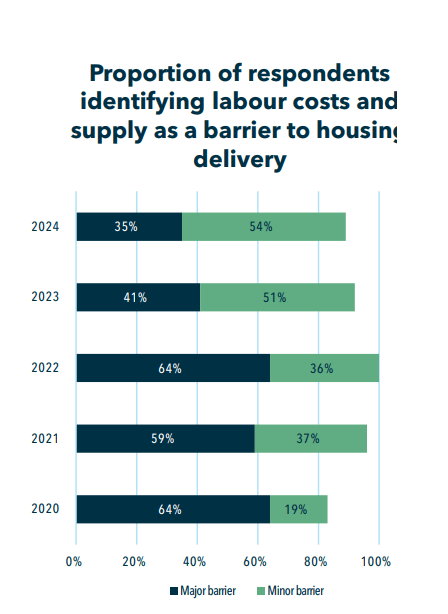
Meanwhile, the latest edition of the Home Builders Federation State of Play report has revealed that it is harder to be an SME developer today than five years ago.
The report, produced alongside Travis Perkins and Close Brothers Property Finance, found that the key blockers were delays to the planning process, difficult economic conditions and the availability of labour.

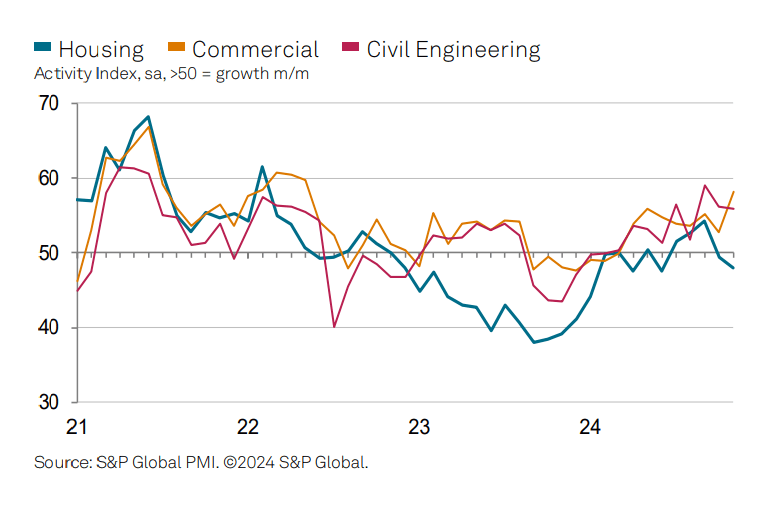
And, in contrast to Starmer’s optimism, the latest S&P Global UK Purchasing Managers’ Index has seen housebuilding activity decline at its sharpest pace since June.
The sector remained the weakest-performing category of construction work in November at an index of 47.9, down from 49.4 in October, with respondents citing elevated borrowing costs and poor consumer confidence as key contributing factors.
Annual house price growth rebounds in November
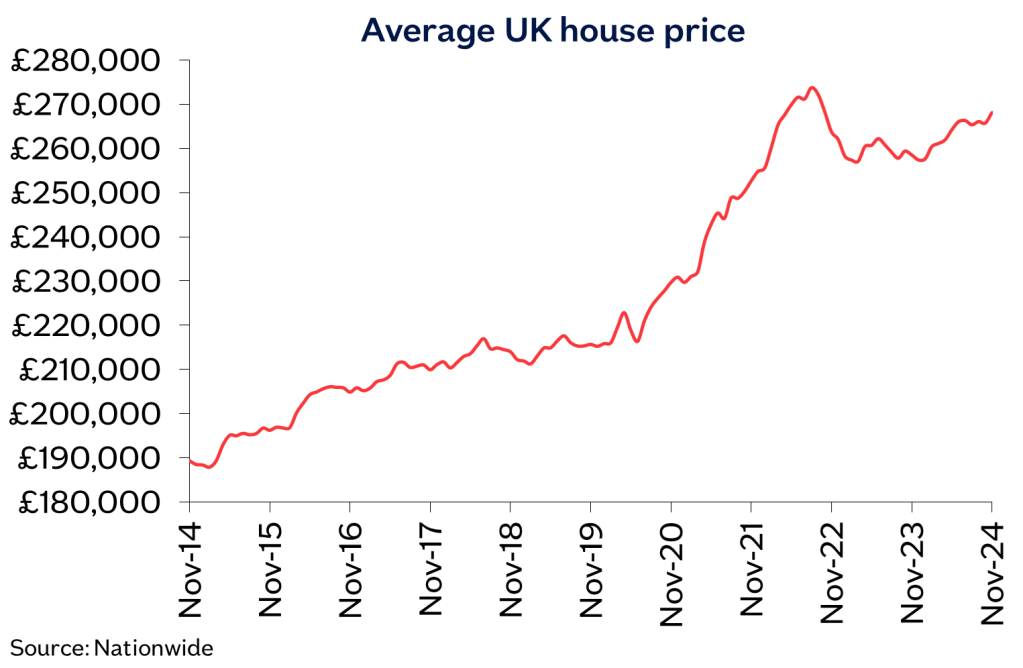
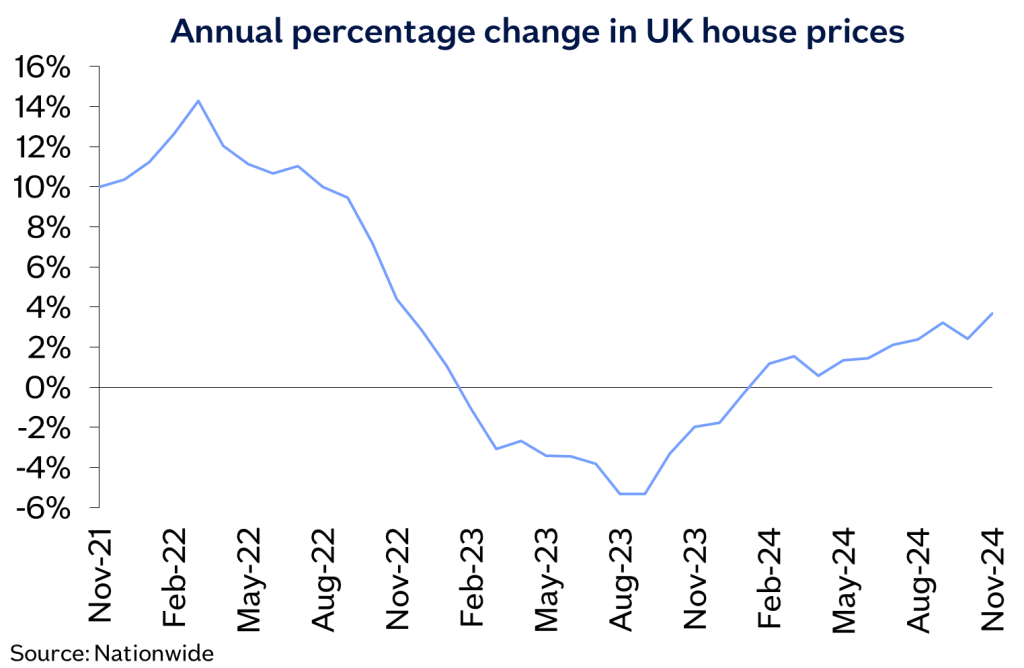
The latest house price index from Nationwide has revealed that the annual growth in property values jumped from 2.4% in October to 3.7% in November – the fastest since November 2022.
House prices rose by 1.2% in the month to £268,144, and are now just 1% below the all-time peak.
Robert Gardner, Chief Economist at Nationwide, described the acceleration in house price growth as “surprising, since affordability remains stretched by historic standards with house prices still high relative to average incomes and interest rates well above pre-Covid levels.”
Halifax also published its house price index for November this week, reporting a 1.3% increase in the month and 4.8% over the year, with the average property costing £298,083 – a new record high.
The mortgage lender reported that this was the fastest monthly rate of the year, and the fifth consecutive monthly rise. Annual growth was the fastest for the past two years.
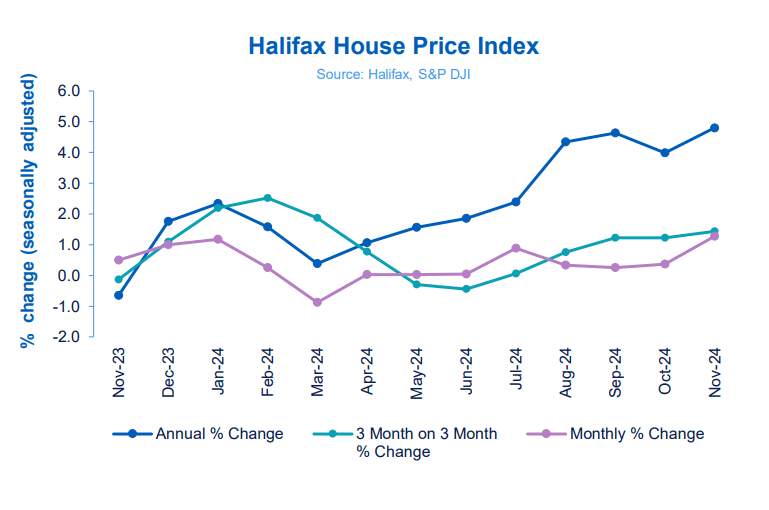
Amanda Bryden, Head of Mortgages at Halifax, said: “As we move towards the end of the year and into 2025, positive employment figures and anticipated decreases in interest rates are expected to continue supporting demand.
“This should underpin further house price growth, albeit at a modest pace as borrowing costs remain above the average of a few years ago.”
Northern Ireland continued to record the strongest property price growth of any nation or region in the UK, rising by 6.8% in the year.
House prices in the North West enjoyed the strongest growth of any region in England, up by 5.9% on an annual basis.
Developers commit to accelerated remediation plan
Nearly 30 developers have committed to the Government’s plan to expedite remedial works, with firms now committing to having all works completed by the end of July 2027.
Under the plan, published alongside the Government’s wider Remediation Acceleration Plan, developers have also committed to six objectives:
- Improve resident experience of remedial works
- Accelerate work to find all unsafe buildings requiring remedial works
- Improve quality of assessments used to determine whether buildings require remedial works
- Accelerate work to fix buildings
- Accelerate resolution of cost-recovery negotiations between developers and social housing providers
- Establish a developer-Ministry of Housing, Communities and Local Government working group to unblock remaining barriers to remediation.
However, the G15 group of housing associations warned that the plan would not work unless funding was in place.
Fiona Fletcher-Smith, chair of the G15, said: “Sped up timelines and tighter deadlines cannot be delivered without increased funding and increased sector capacity.
“Resources are needed to ensure even more investment is not diverted away from building new homes for those who need them most.”
 Housing View