
Annual rate of house price growth slows to 4.1% in January
The latest house price index from mortgage lender Nationwide has found that house prices have increased by 0.1% in the month, but that property value growth has slowed over the year from 4.7% in December to 4.1% in January.
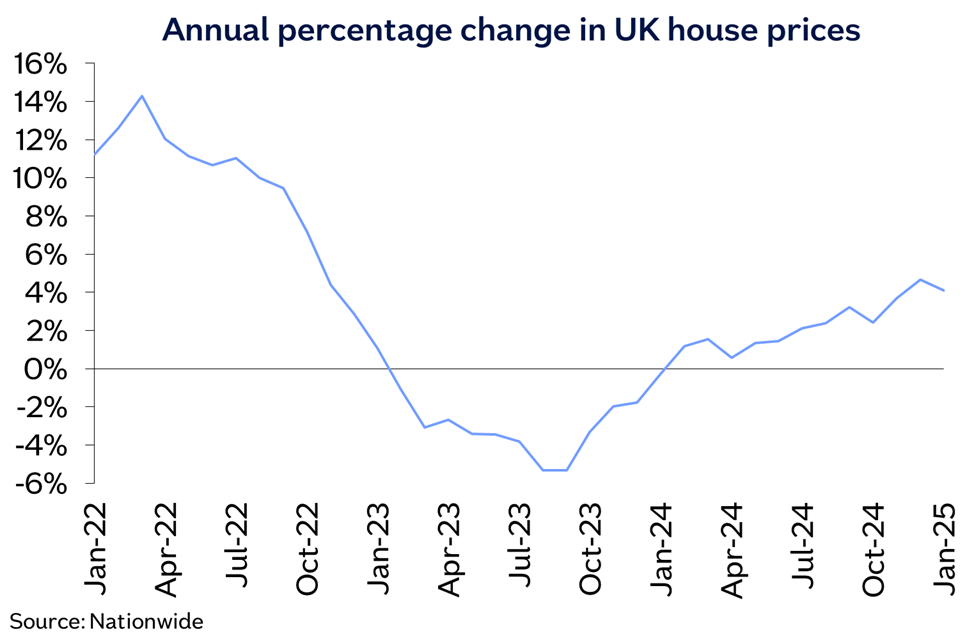
Valuing the average property at £268,213, the index report also highlighted the lack of affordability within the housing market.
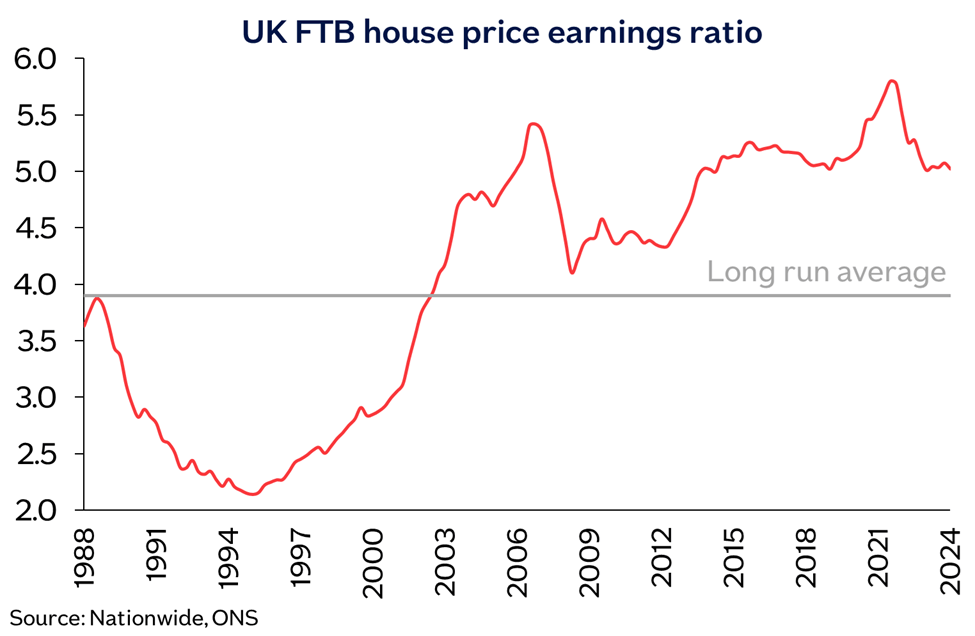
A prospective buyer earning the average UK income and buying a typical first-time buyer property with a 20% deposit would have a monthly mortgage payment equivalent to 36% of their take-home pay – well above the long-run average of 30%.

The house price to earnings ratio stands at 5.0 at the end of 2024, well above the long-run average of 3.9.
Meanwhile, the Zoopla house price index for January has found that the sales market is off to a stronger start than in 2023 and 2024, with buyer demand 13% higher than a year ago.
The market improvement is mostly driven by the removal of stamp duty relief from April encouraging first-time buyer demand.
The average house price in December 2024 was valued at £267,700 – a 2% increase when compared to December 2023.

‘Fundamental reset’ required for construction workforce
This week saw the Department for Education publish the Government’s response to the ITB review, conducted by Mark Farmer in 2023 and finalised last year.
The report stresses the vital need for the work of the Industrial Training Boards within the construction and engineering industries, and calls on them to do more.
It is hoped that this review prompts a much wider debate on required changes to the broader construction skills system.
Mark Farmer, Lead Reviewer
The Home Builders Federation (HBF) also published two key reports this week.
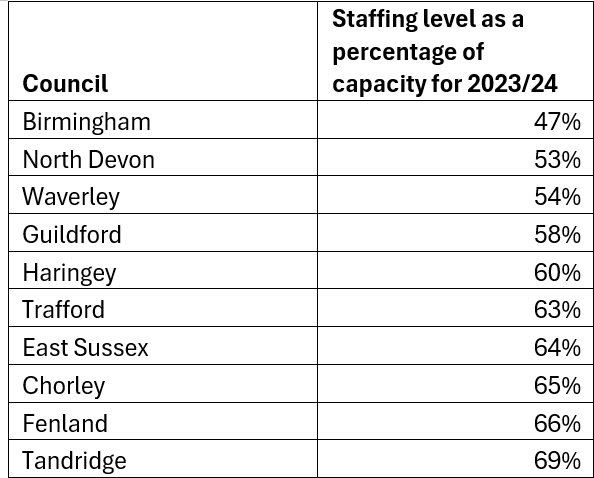
The first revealed that 80% of local planning authorities are operating below full capacity, with many unable to keep up with the rising demand for housing applications.
This, in turn, severely delays the delivery of thousands of new homes.
The Planning on Empty report received responses from 134 local planning authorities, and estimates that 2,200 planning officers are needed across England and Wales to plug the gap.
The second report found that housebuilders contributed more than £50bn to local economies across England and Wales in 2023-24.
Ahead of the upcoming New Homes Week, the HBF has issued a series of regional reports examining how home building supports local economies, improves communities and delivers essential infrastructure.
Despite these positive impacts, the HBF reported a lack of awareness within local communities of the contributions home builders made to local economies.
Meanwhile, a report by data company Searchland has suggested that around 27,000 homes refused planning permission since 2010 should be revisited under new grey belt rules.
Searchland said there have been 3,425 planning applications rejected since 2010 for being located on green belt land which could now be considered grey belt.
Searchland co-founder Hugh Gibbs said: “With the creation of the grey belt, the likelihood is that these applications are well worth revisiting.”
The news comes in the same week that the Government announced the next phase of planning reform.
Under the Planning and Infrastructure Bill, to be introduced in the spring, housebuilders will potentially have default permission to build homes near commuter transport hubs.
Chancellor Rachel Reeves has also announced reform to the statutory consultee system, which requires developers to consult local communities and expert bodies on planning decisions.
The Government has stated a moratorium on any new statutory consultees, with Reeves and deputy prime minister and housing secretary Angela Rayner soon to review existing arrangements “to make sure they meet this government’s ambitions for growth”.
The Government said that the current setup of statutory consultees “often means too many organisations consulted on too wide a range of issues, clogging up much-needed development”.
Construction set for gradual recovery
UK construction output is forecast to recover steadily over the next two years, according to the latest report from the Construction Products Association (CPA).
The forecast predicts total construction output to grow by 2.1% in 2025 and 4.0% in 2026.
The recovery for this year is a downward revision compared with the 2.5% growth predicted in the CPA’s Autumn report.
Overall, private new build housing output is forecast to rise by 6.0% in 2025 and 8.0% in 2026.
 Housing View