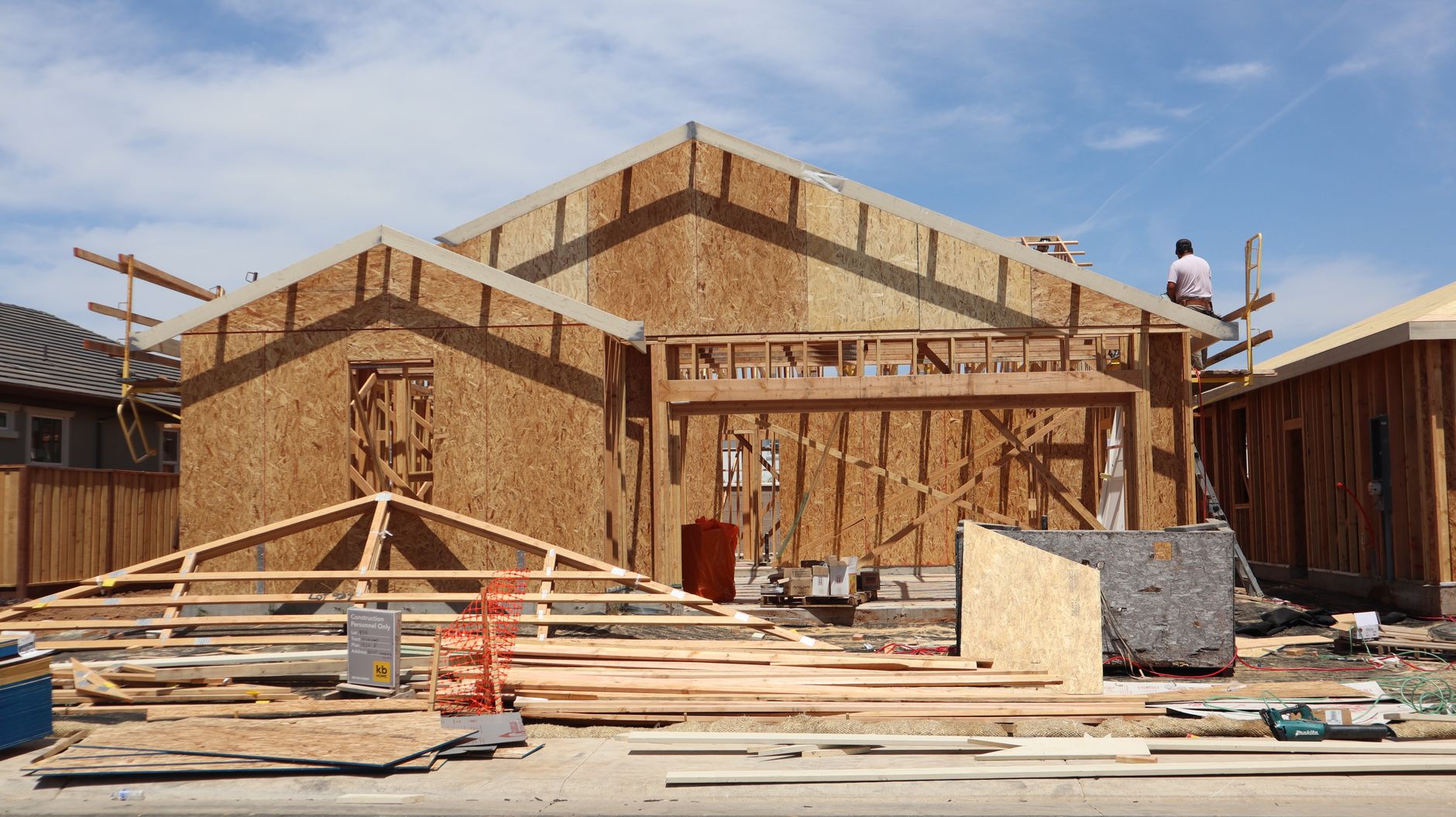
Glenigan report reveals challenging quarter
The July Construction Review from construction intelligence company Glenigan has revealed that residential starts fell by over a third in the three months to the end of June.
The overall construction sector saw an 8% increase in project starts over the same period, but housing suffered a -34% slump.
There was also a -16% fall in the number of detailed planning approvals, according to the report.
However, the social housing sector performed well, recording growth in the quarter and accounting for the largest share of starts.
Allan Wilen, Economics Director at Glenigan, said: “Whilst the next two quarters are going to see little movement of the dial, we still predict, according to our 2026 – 2028 Forecast, that recovery will be seen in 2027.
“However, with the promise of a new Prime Minister going into the second half of 2026 we might see the situation change further, as the new administration looks to establish its own identity. The big question on everyone’s lips now will be whether they stick to the parameters of the Manifesto and spending commitments made in 2024, or decides to plot their own political course and economic direction.”
Construction output falls for second month
Official figures have revealed that construction output slipped for the second month in a row in May, falling by -0.8%.
However, total construction output is estimated to have grown by 1.6% in the three months to May.
The latest data from the Office for National Statistics found that the repair and maintenance sector was the main driver for the slump, whilst new private housing output rose by 2.3%.
MPs call for vacant buildings to be reused
The Culture, Media and Sport (CMS) Committee has claimed that almost half of the government’s 1.5 million new homes target could be delivered through the reuse of vacant historic buildings.
The CMS has called for a “heritage-to-housing” scheme to bring heritage buildings back into residential use, and suggested that the UK should “draw on lessons from other countries, such as Italy’s €1 house initiatives and renovation tax incentives but be adapted to UK conditions”.
Meanwhile, the government has confirmed that remediation funding will be available for unsafe residential buildings lower than 11 metres.
The Ministry of Housing, Communities and Local Government (MHCLG) said that it would prioritise buildings “facing the greatest risk” under its existing Cladding Safety Scheme.
The MHCLG also announced the next phase of its local government reorganisation programme, streamlining 134 councils into 38 unitary authorities in a restructure which would deliver “better, more efficient public services”.
Draft London Plan out for consultation
The Mayor of London has launched a consultation on a new draft London Plan, proposing a more flexible approach to affordable housing, prioritising brownfield and small-site development, and targeting 558,000 new homes by 2037 – well below the government’s annual target of 85,000 homes.
The draft plan introduces borough-specific affordable housing thresholds of 20%, 25% and 35%, while retaining higher requirements of 50% on green belt sites, 40% on public sector land and 35% on industrial land.
Developer and supply chain updates
Crest Nicholson reported a statutory pre-tax loss of £35.2m for the six months to 30 April 2026, as revenue fell to £197.6m and completions dropped to 584 homes amid ongoing economic uncertainty.
Net debt increased to £141.8m, while discussions with lenders over amendments to its revolving credit facility remain ongoing, with the housebuilder acknowledging material uncertainty but expressing confidence in securing a favourable outcome.
–
Barratt Redrow completed 17,667 homes in the year to 28 June 2026 and expects adjusted pre-tax profit of £559.5m, in line with market expectations, while forecasting 17,700–18,200 completions from 415 outlets in FY27.
The housebuilder also announced plans to return £400m to shareholders, including a £386m share buyback programme, citing its strong balance sheet despite continued macroeconomic uncertainty and subdued customer demand.
–
Wain Group increased turnover by 9% to £304m and pre-tax profit by 50% to £13.5m in the year to September 2025, while completions rose 16% to 1,024 homes.
Its strategic land business reported a £1m loss on turnover of £17.1m, compared with a £900,000 profit the previous year, which the company attributed to the timing of property disposals.
–
William Davis Homes has appointed former Persimmon executive Dan Endersby as its first Chief Operating Officer, a newly created role to support the housebuilder’s growth ambitions across the East and West Midlands.
The company said Endersby, who spent the past six years as Managing Director of Persimmon North Midlands, will strengthen its leadership team as it pursues new land opportunities across its regional business.
–
L&G Affordable Homes reported a £24.2m loss despite increasing turnover by 34%, with property revaluations weighing on the bottom line.
The for-profit affordable housing provider, backed by insurance group L&G, published results across its seven operating entities, showing continued revenue growth despite the accounting loss.