
Rising mortgage rates yet to have an effect
The housing market has so far remained steady despite mortgage rates rising faster in recent weeks, according to the latest house price index from Rightmove.
Average new seller prices rose by 0.8% in April to £373,971, which is below the long-term average for the month, but consistent with February and March.
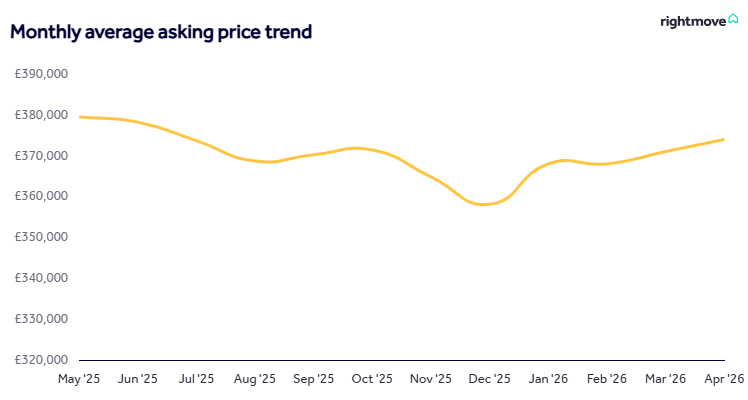
Colleen Babcock, Property Expert at Rightmove, said: “With mortgage rates remaining elevated due to the war in Iran, it’s not a surprise that price growth is proving strongest in parts of the market less exposed to higher borrowing costs. Across Great Britain, Scotland stands out as an example of resilience, with average prices rising by over 4%.
“Lower average asking prices and a faster home-buying process continue to support price growth in the Scottish market. However, for most of the market, the combination of rising mortgage rates and the number of homes for sale being at its highest level for the time of year over a decade, means that competitive pricing is crucial for sellers looking to attract buyer interest and secure a sale this spring.”
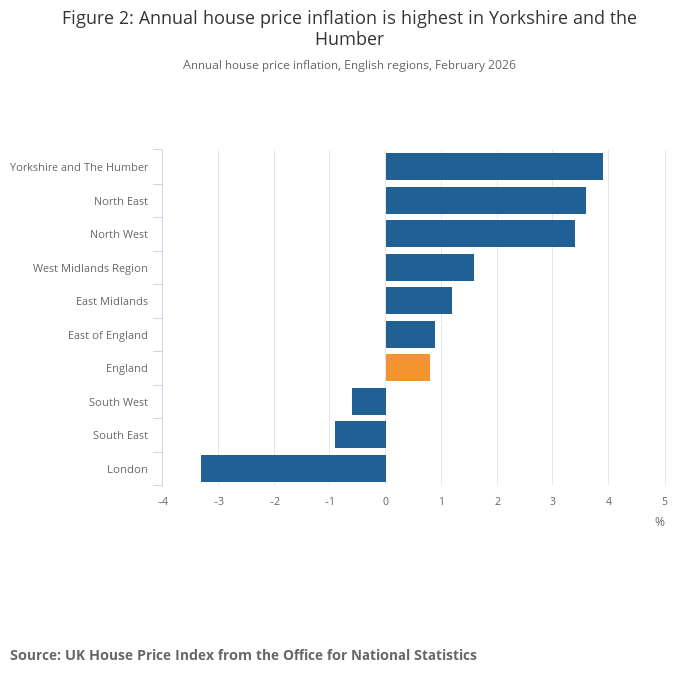
Meanwhile, latest official data from the Office for National Statistics has found that average UK house prices rose by 1.2% in the year to February 2026, up from 1.0% in January.
The average house price has increased to £290,000 in England, £210,000 in Wales, and £187,000 in Scotland.
BNG exemption for small sites confirmed
The Government has confirmed that sites with an area of 0.2 hectares or less will be exempt from biodiversity net gain (BNG) regulations.
DEFRA said it expected the change to exempt around 50% of residential planning permissions, stating that “this will benefit local authority capacity too, meaning they can focus resources on the bigger residential schemes, where greater biodiversity gains can potentially be made.”
The exemption is due to come into force before July 31 2026, with DEFRA bringing forward secondary legislation before summer recess.
Developer and supply chain updates
Crest Nicholson has cut its full-year output forecast to 1,400–1,500 homes, down from 1,550–1,700, citing weaker enquiries and visitor levels amid macroeconomic uncertainty. While reservation rates have improved since mid-January, the housebuilder said it is taking a more cautious view for the remainder of the year, with its order book standing at 1,106 units.
The group also expects a sharp drop in land sales, with revenue revised to around £40m from £75m–£100m, as buyer sentiment softens. It is in early talks to secure temporary banking covenant relief and now forecasts EBIT of £5m–£15m, alongside interest costs of about £15m and year-end net debt of £100m–£120m.
–
Allison Homes has reported a strong financial year, with turnover rising nearly 30% to £211.9m and completions increasing to 808 homes from 626. Growth was driven by a higher contribution from affordable housing, alongside improved open market sales supported by lower interest rates.
The housebuilder said its focus on large-scale partnerships delivery underpinned performance, enabling faster delivery of complex developments with registered providers. Profitability also improved, with gross profit up to £30.5m and EBITDA rising to £15.5m.
 Housing View