
Zoopla index shows little effect of ongoing war
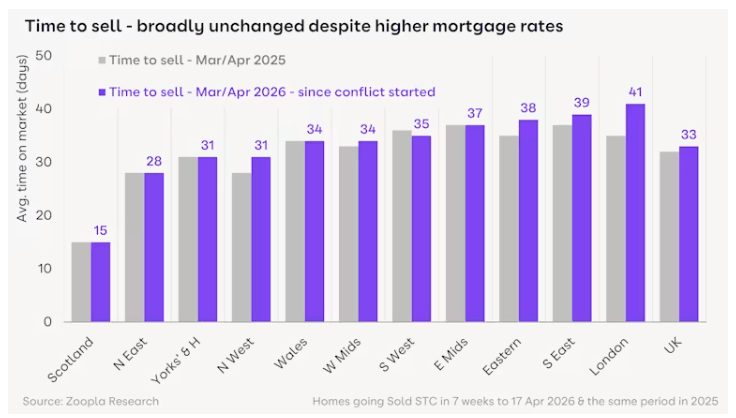
The latest house price index from property website Zoopla has found that homes are taking just one day longer to sell than last year, despite higher mortgage rates.
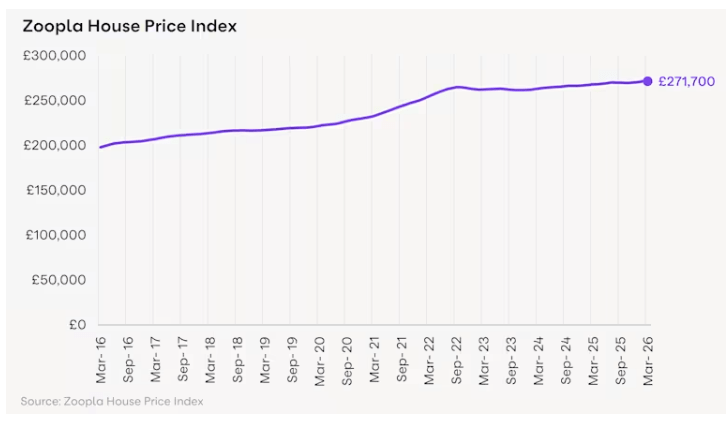
Buyer demand also rebounded after Easter to its highest level since the Middle East conflict began, with house price inflation remaining steady at 1.3% over the year to March.
The average UK property is now valued at £271,700.
Material prices rise after fuel cost surge
The Construction Leadership Council (CLC) published a material supply chain group update this week, warning that the impact of the Middle East conflict – and subsequent energy price rises – could increase material costs by over 5% this year.
The price increases predominantly affect energy-intensive products, such as steel, bricks, concrete, glass and insulation.
However, the CLC took aim at manufacturers and suppliers, accusing them of limited detail to justify price increases.
One of the key challenges across the supply chain remains the lack of detailed explanation accompanying price increases, making it difficult to justify and communicate these costs to clients.
Clearer evidence and transparency would be welcomed, even if the increases themselves are not.
Construction Leadership Council
Residential development land values weaken
Geopolitical uncertainty and persistent viability pressures are weighing on demand and weakening land values, according to global property consultancy Knight Frank.
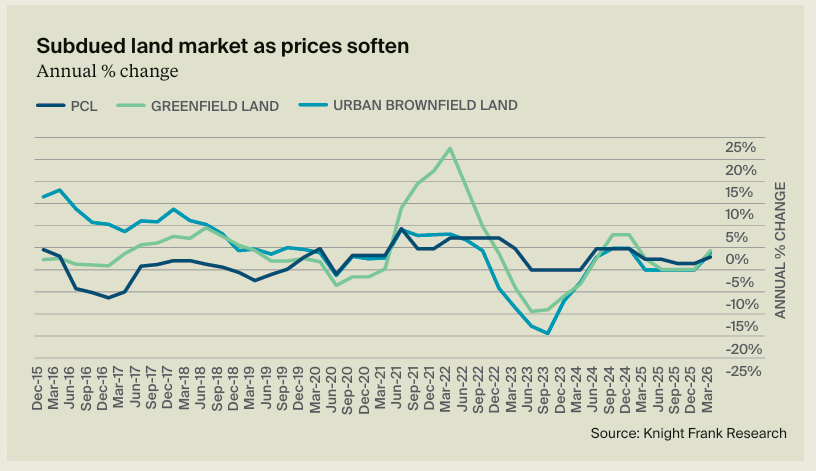
Urban brownfield and prime central London residential development land declined by -2.5% in the first quarter of 2026, leaving annual declines at -1.1% for prime central London and -2% for urban brownfield land.
The Residential Development Land Index also reported that 39% of survey respondents are concerned about rising material costs and availability (up from 20% in Q4 2025), and 46% of respondents expect new home starts to fall in the second quarter of 2026.
Planning and housing bill becomes law
The English Devolution and Community Empowerment Bill has become law, giving elected mayors more powers over planning and housing, as well as the ability to make development orders.
The Act mandates mayoral strategic authorities to develop local growth plans, and provides mayors with additional powers around transport and economic regeneration.
Mayors will have powers to intervene in planning applications of strategic importance, grant upfront planning permission for key housing and infrastructure, projects, and charge a mayoral community infrastructure levy on developers.
Developer and supply chain updates
Persimmon said the Iran conflict has had no material impact on trading, though enquiries have softened slightly and early signs of cost inflation are emerging, particularly from higher energy prices. The housebuilder reported resilient performance in the year to April 26, with net private sales per outlet up 3% to 0.67 and forward private sales rising 7% to £1.8bn, with average selling prices up 5% to about £306,900.
The group warned inflationary pressures could affect results into 2027 but said it is mitigating the impact through supplier relationships and cost control. Assuming stable market conditions, Persimmon expects to deliver 12,000–12,500 homes this year and achieve underlying pre-tax profit in line with consensus forecasts of £462m.
–
Taylor Wimpey reported steady trading in the year to April 26, with a net private sales rate of 0.74 per outlet per week, slightly down from 0.77 a year earlier, alongside modest pricing pressure. Customer engagement remained resilient, though prices in the order book are around 1% lower year-on-year, with affordability constraints most evident in southern regions.
The housebuilder said build cost inflation is set to reach mid-single digits for the year as it monitors macroeconomic conditions. Its total order book stood at £2,229m, down from £2,335m, representing 7,689 homes compared with 8,153 last year.
–
Travis Perkins said trading remained challenging in the first quarter to March 31 2026, with group revenue down 1.7% on a like-for-like basis as construction activity stayed subdued. Merchanting revenue fell 2.3%, although the business continued to pass on supplier price increases, secure procurement savings and maintain market share.
Toolstation UK delivered growth of 2.6%, supported by estate maturity and margin improvements, while Toolstation Benelux saw revenue decline 7.1%. The group said it remains focused on cost control, operational efficiencies and capital discipline to strengthen its financial position.
 Housing View